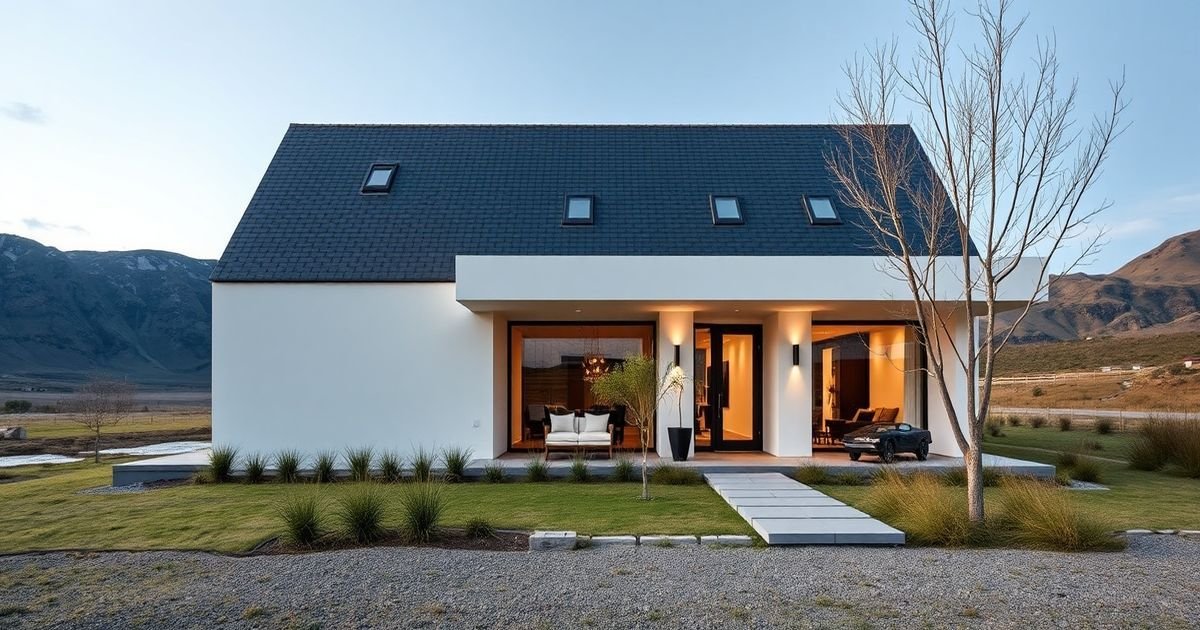
Elon Musk, the visionary behind Tesla, SpaceX, and X (formerly Twitter), has long captured public fascination not just for his companies, but for his unconventional lifestyle. A key aspect of this intrigue centers on the elon musk house. Unlike traditional billionaires, Musk’s approach to real estate has been marked by surprising minimalism, strategic sales, and a focus on functionality over opulence. As of 2026, his primary residence reflects his evolving priorities: efficiency, sustainability, and proximity to his most critical ventures, primarily in Texas. Understanding the elon musk house provides a unique lens into how the world’s richest person balances immense wealth with a self-proclaimed disdain for excessive luxury, constantly redefining what a “home” means in the tech age.
The Evolution of Musk’s Property Portfolio
Musk’s housing journey has been anything static. He famously sold nearly all his California properties between 2020 and 2021, including a Bel Air mansion once valued at $100 million, citing a desire to own “no house” and focus on building the future. This dramatic shift culminated in his relocation to Texas, aligning with Tesla’s Gigafactory and SpaceX’s Starbase operations. His current primary dwelling is a relatively modest, prefabricated home located within the Starbase facility near Boca Chica. This structure, reportedly costing around $50,000, emphasizes practicality: it’s compact, energy-efficient, and designed for quick assembly. This move starkly contrasts with the sprawling estates typical of his peer group, reinforcing his stated belief that “houses are just for sleeping.” The elon musk house philosophy prioritizes location and utility above all else, a direct reflection of his operational mindset.
Design Philosophy: Minimalism Meets Technology
The core principle driving Musk’s housing choices is radical minimalism combined with cutting-edge technology. His Starbase residence reportedly features:
- Tesla Solar Roof and Powerwall integration for near-total energy independence
- Advanced climate control systems optimized for the harsh South Texas environment
- Minimalist interiors focused on essential comfort, avoiding decorative excess
- Proximity to workspaces eliminating commute time, a concept Musk champions
This approach isn’t about deprivation but optimization. As Wikipedia details regarding Tesla’s mission, Musk applies the same efficiency principles to his personal life. The elon musk house serves as a functional base camp, not a status symbol. He has openly criticized traditional luxury real estate as “pointless” when resources could fund space exploration or sustainable energy. This philosophy extends to his preference for modular, factory-built homes over custom constructions, viewing them as faster, cheaper, and more adaptable – principles he advocates for solving housing shortages globally. For deeper insights into sustainable architecture trends influencing such choices, explore our resources.
Controversies and Criticisms
Musk’s housing strategy hasn’t been without debate. Critics argue that selling high-value California properties while advocating for housing affordability is contradictory, especially given his immense wealth. The concentration of his residence within a private industrial complex like Starbase also raises questions about transparency and the blending of personal life with corporate operations. Furthermore, his initial claim of owning “no house” was technically inaccurate, as he retained ownership of a small property in Texas. These controversies highlight the tension between Musk’s public persona as a frugal futurist and the realities of managing vast assets. Some urban planners question whether his model is scalable or desirable for the average person, pointing to the unique demands of his work-life integration. The elon musk house narrative thus becomes a complex case study in wealth, ideology, and practicality.
The Future of the Elon Musk House Concept
Looking ahead in 2026, Musk’s housing choices continue to evolve, heavily influenced by his companies’ trajectories. With SpaceX’s Starship development accelerating and Tesla expanding its Texas footprint, his Starbase residence remains central. However, speculation persists about potential future dwellings, possibly incorporating even more radical sustainable technologies or modular designs pioneered by companies like Boxabl, which Musk has expressed interest in. His vision seems aligned with creating highly efficient, affordable housing solutions – a concept he believes could revolutionize urban living. According to Britannica, architectural innovation often stems from such boundary-pushing experiments. Whether his personal elon musk house inspires mass adoption or remains a unique artifact of his singular focus, it undeniably challenges conventional notions of luxury and homeownership in the 21st century. To stay updated on emerging real estate technologies, visit here.
In conclusion, the elon musk house is far more than a physical structure; it’s a manifestation of Musk’s core philosophies: efficiency, sustainability, and the relentless pursuit of progress. From selling mansions to embracing a compact, tech-integrated home at Starbase, his choices prioritize function and future-building over traditional displays of wealth. While controversial, this approach offers a provocative blueprint for rethinking housing in an era of climate change and technological abundance. As Musk continues to push boundaries in space and energy, his living situation will likely remain a fascinating, minimalist footnote in the larger story of his ambition – proving that for some, the ultimate luxury isn’t space in a house, but space to change the world.