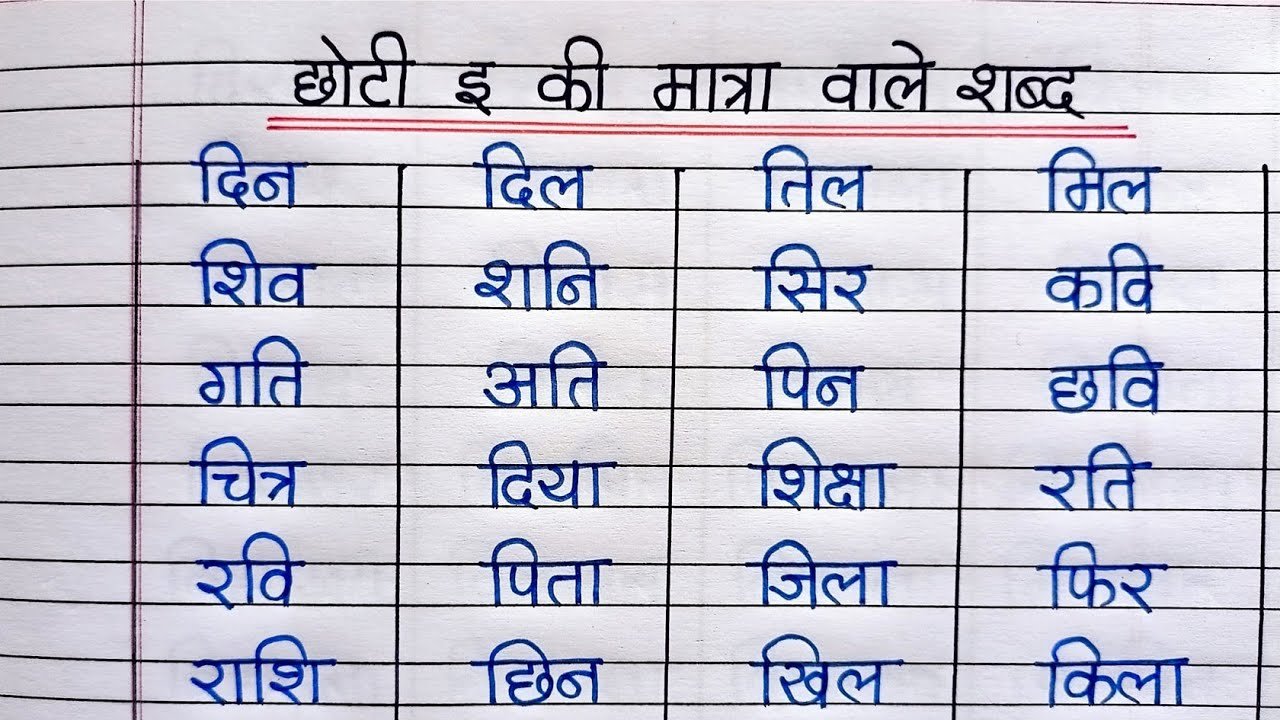
Understanding the nuances of Hindi pronunciation is crucial for fluency, and one fundamental aspect is mastering chhoti e ki matra wale shabd. These are words containing the short ‘e’ vowel sound, represented by the chhoti e matra (े) in the Devanagari script. Unlike the longer ‘ay’ sound (ए), the chhoti e is a brief, crisp vowel sound essential for accurate Hindi speech and writing. Grasping this concept prevents common pronunciation errors and builds a strong foundation for learners. Whether you’re a beginner starting your Hindi journey or an intermediate speaker refining your skills, focusing on chhoti e ki matra wale shabd significantly enhances your linguistic accuracy and confidence. This guide dives deep into what these words are, why they matter, and how to use them correctly.
Understanding chhoti e ki matra wale shabd
The term chhoti e ki matra wale shabd specifically refers to Hindi words where the vowel sound ‘e’ is short and unstressed, marked by the chhoti e matra (े) attached to a consonant. This matra is distinct from the badi e matra (ए), which produces a longer, diphthongal ‘ay’ sound (like in “kay”). The chhoti e sound is similar to the ‘e’ in the English word “bed” – short and precise. It’s a core component of Hindi phonetics, appearing frequently in everyday vocabulary. Correctly identifying and pronouncing these words is non-negotiable for sounding natural. Mispronouncing chhoti e ki matra wale shabd as the longer ‘ay’ sound is a frequent error among learners, leading to misunderstandings. According to Wikipedia’s Hindi phonology section, mastering vowel length distinctions like this is critical for intelligibility in Indo-Aryan languages. Understanding this distinction forms the bedrock of clear Hindi communication.
Why chhoti e ki matra wale shabd Matter in Hindi
The significance of chhoti e ki matra wale shabd extends far beyond theoretical grammar; it directly impacts comprehension and fluency. Using the wrong matra changes word meaning entirely. For instance, “केला” (kela – banana) uses chhoti e, while “केला” (kayla – a name/term) would theoretically use badi e, though context usually clarifies. More critically, consistent mispronunciation of the short ‘e’ can make speech sound unnatural or even confusing to native speakers. It affects the rhythm and melody of Hindi, which relies heavily on precise vowel sounds. For learners, focusing on these words builds essential listening skills and pronunciation habits. It trains the ear to distinguish subtle sound differences crucial in a language where vowel length can alter meaning. Mastering chhoti e ki matra wale shabd is therefore not just about correctness; it’s about achieving authentic, confident communication. Neglecting this aspect hinders progress significantly.
Common Examples of chhoti e ki matra wale shabd
Recognizing chhoti e ki matra wale shabd becomes easier with concrete examples. Here are some fundamental words where the short ‘e’ sound is essential:
- केला (kela) – Banana
- चेक (chek) – Check (as in a bill)
- डेट (ḍeṭ) – Date (as in calendar)
- फेंक (phenk) – Throw (imperative)
- बेटा (beṭā) – Son
- चेत (chet) – Consciousness (as in “chetna”)
- डेरा (ḍerā) – Camp
- फेस (phēs) – Face (as in social media)
Notice how the chhoti e matra (े) is attached directly to the consonant, creating that distinct short sound. Practice saying these words slowly, focusing on the crisp ‘e’ without elongating it into ‘ay’. Pay attention to words like “बेटा” – the ‘e’ is short, unlike the longer ‘ay’ in “बेटी” (beṭī – daughter), which uses badi e. Consistent practice with these examples solidifies the sound pattern in your mind and speech.
Common Mistakes to Avoid
Learners often stumble with chhoti e ki matra wale shabd due to interference from English or other languages. The most prevalent error is pronouncing the short ‘e’ as a longer ‘ay’ sound. For example, saying “kayla” instead of “kela” for banana. Another mistake is omitting the matra sound entirely, merging it with the consonant (e.g., saying “klā” for “kela”). Confusing chhoti e with badi e is also frequent, especially in words where the spelling might seem ambiguous without context. Additionally, learners might apply English vowel rules, where ‘e’ can have multiple sounds, leading to inconsistency. To overcome this:
- Listen Actively: Immerse yourself in native Hindi audio – movies, songs, podcasts. Focus on how words like “केला” are pronounced.
- Mimic Precisely: Repeat after native speakers, paying strict attention to vowel length.
- Use Visual Aids: Write words with the matra clearly visible to reinforce the visual cue for the short sound.
- Record Yourself: Compare your pronunciation to native sources to identify discrepancies.
Tips for Mastering chhoti e ki matra wale shabd
Achieving proficiency with chhoti e ki matra wale shabd requires targeted practice. Start by drilling common words from the list above, using flashcards that highlight the matra. Incorporate these words into simple sentences: “मैंने केला खाया” (I ate a banana). Leverage technology – many language apps have pronunciation exercises focusing on Hindi matras. For structured learning, explore our comprehensive Hindi resources designed specifically for mastering these nuances. Consistent daily practice, even just 10-15 minutes, yields significant results. Don’t rush; focus on accuracy over speed initially. As you become more comfortable, challenge yourself with less common words containing chhoti e. Remember, mastery comes from mindful repetition and actively listening for the distinct short vowel sound in everyday Hindi. Patience and persistence are key to internalizing this fundamental aspect.
Conclusion: The Path to Hindi Fluency
Mastering chhoti e ki matra wale shabd is a pivotal step in your Hindi language journey. These words, defined by the short ‘e’ vowel sound marked by the chhoti e matra, are ubiquitous in the language. Correct pronunciation ensures clarity, prevents misunderstandings, and builds the foundation for more complex linguistic structures. By understanding the rules, studying common examples, avoiding typical pitfalls, and practicing diligently, you integrate this essential skill seamlessly into your speaking and listening abilities. Embrace the challenge – the effort you put into perfecting these sounds will pay dividends in your overall fluency and confidence. For ongoing support and advanced learning strategies, visit our language learning hub to continue refining your Hindi skills. As noted by linguistic authorities like Britannica, attention to phonetic detail is what transforms language learners into effective communicators. Start practicing chhoti e ki matra wale shabd today for clearer, more authentic Hindi tomorrow.