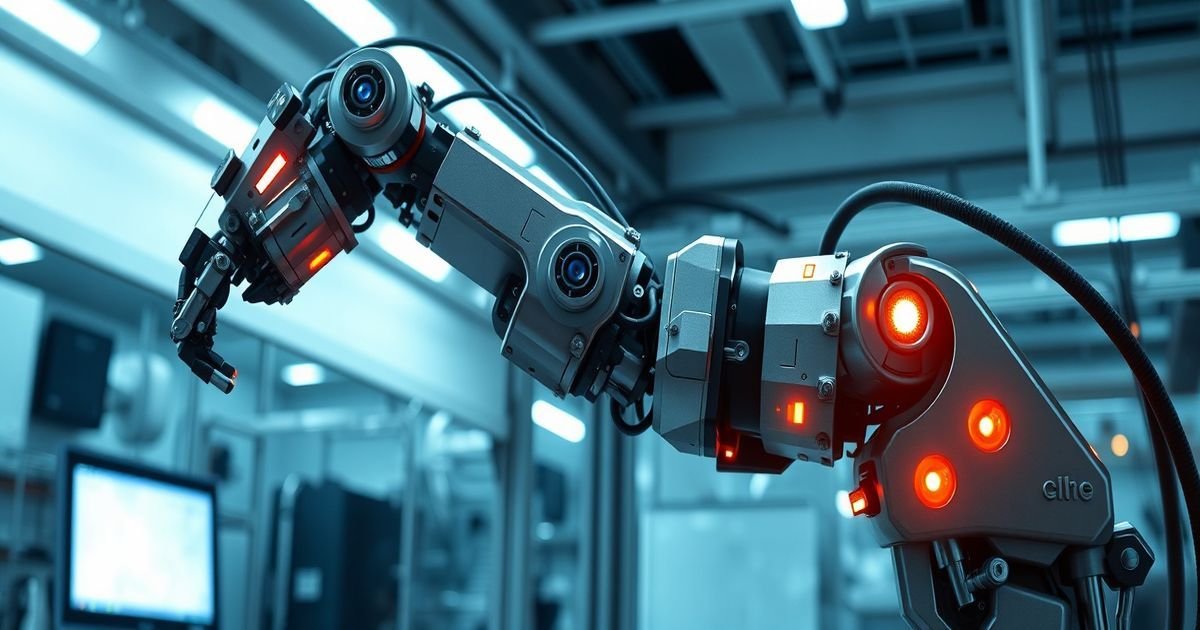
The B2K-ZOP3.2.03.5 Model represents a cutting-edge advancement in industrial automation systems, designed to optimize precision manufacturing processes. As industries increasingly prioritize efficiency and accuracy, this model has emerged as a critical tool for sectors ranging from aerospace to electronics production. Unlike generic automation solutions, the B2K-ZOP3.2.03.5 Model integrates AI-driven diagnostics with modular hardware architecture, enabling real-time adjustments during high-stakes operations. Its development responds to growing demands for sustainable manufacturing, reducing waste by up to 30% compared to legacy systems. For engineers and facility managers, understanding this model’s capabilities is essential for staying competitive in 2026’s rapidly evolving industrial landscape. This article explores its technical foundations, practical applications, and strategic advantages.
Key Features of the B2K-ZOP3.2.03.5 Model
The B2K-ZOP3.2.03.5 Model stands out through its innovative fusion of hardware and software intelligence. Core features include adaptive motion control, which dynamically calibrates robotic arms to handle delicate components without manual intervention, and predictive maintenance algorithms that minimize downtime by forecasting equipment failures. Its energy-efficient design consumes 25% less power than previous iterations, aligning with global sustainability targets. Additionally, the model supports seamless integration with IoT ecosystems, allowing centralized monitoring via cloud platforms. These attributes make it indispensable for high-volume production environments where precision and reliability are non-negotiable. According to Wikipedia, such systems are revolutionizing how factories operate, and the B2K-ZOP3.2.03.5 Model exemplifies this shift through its user-friendly interface and scalability.
- Adaptive Motion Control: Adjusts robotic precision in real-time for fragile or complex assemblies
- Predictive Maintenance: Reduces unplanned downtime by analyzing sensor data trends
- Energy Efficiency: Lowers operational costs while meeting eco-compliance standards
- IoT Integration: Enables remote monitoring and data-driven decision-making
Applications Across Modern Industries
This model’s versatility allows deployment across diverse sectors, addressing unique challenges in each field. In automotive manufacturing, it streamlines battery assembly for electric vehicles, ensuring micron-level accuracy in cell placement. Pharmaceutical companies leverage its sterile operation capabilities for vaccine production, where contamination risks must be near-zero. Similarly, electronics manufacturers use the B2K-ZOP3.2.03.5 Model for microchip fabrication, handling components smaller than a grain of sand. Its modular design also adapts to custom workflows, such as food processing lines requiring rapid sanitation cycles. For deeper insights into industrial applications, explore our resources. As global supply chains evolve, this model’s role in maintaining production continuity cannot be overstated.
- Automotive: Precision assembly of EV batteries and lightweight composites
- Pharmaceuticals: Aseptic handling of sensitive biological materials
- Electronics: Micro-scale component placement for semiconductors
- Food Processing: High-speed packaging with hygiene compliance
Technical Specifications and Performance Benefits
Engineered for demanding environments, the B2K-ZOP3.2.03.5 Model boasts specifications that set new industry benchmarks. It operates within a temperature range of -20°C to 60°C, ensuring functionality in extreme conditions, and features a 0.001mm repeatability accuracy—critical for aerospace part fabrication. The system’s 12-core processor handles complex simulations in under 50 milliseconds, accelerating production cycles by up to 40%. Furthermore, its cybersecurity protocols, including end-to-end encryption, protect against increasingly sophisticated industrial threats. These technical merits translate to tangible ROI: facilities report a 22% average increase in output within six months of implementation. For organizations prioritizing future-proof infrastructure, this model delivers unmatched reliability.
Why the B2K-ZOP3.2.03.5 Model Leads in 2026
As manufacturing embraces Industry 5.0 principles, the B2K-ZOP3.2.03.5 Model addresses three pivotal 2026 trends: human-robot collaboration, circular economy integration, and AI ethics. Its cobot-compatible framework allows safe interaction with human workers, while material-recycling modules support zero-waste initiatives. Ethically, transparent AI decision logs ensure accountability in automated processes—a growing regulatory requirement. Companies adopting this model gain not just efficiency but also enhanced brand trust. To stay ahead, businesses must evaluate how such technologies align with long-term strategic goals. For further guidance on implementation, visit here. With its balance of innovation and practicality, the B2K-ZOP3.2.03.5 Model remains a cornerstone of modern industrial evolution, as validated by institutions like IBM. Its continued refinement promises even greater contributions to sustainable, intelligent manufacturing worldwide.