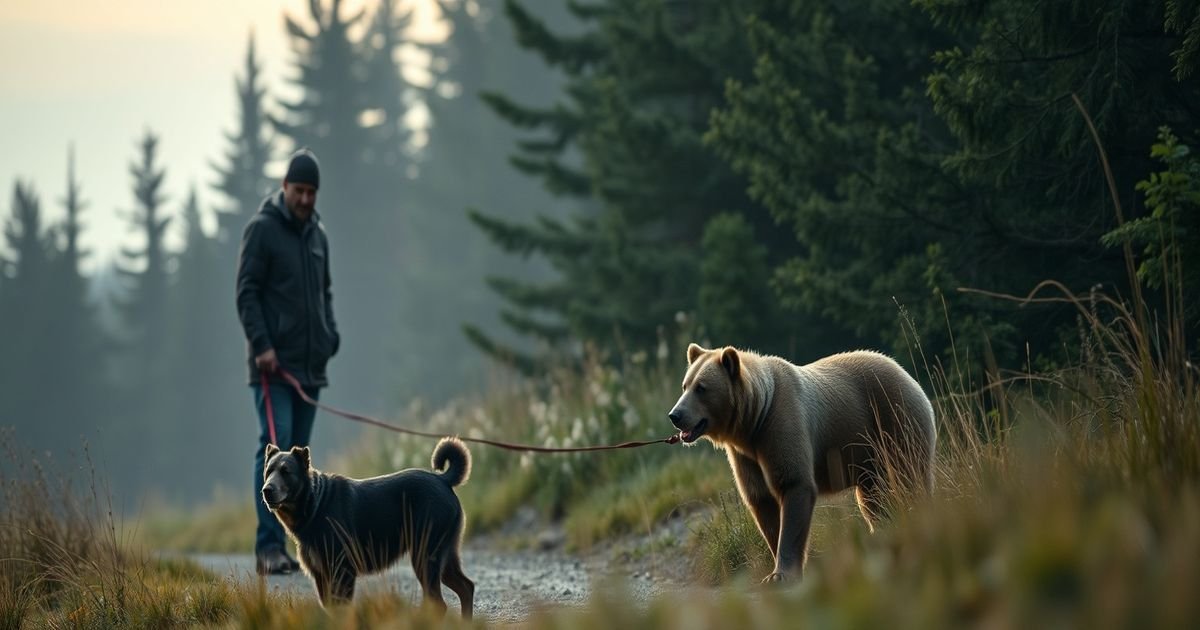
Encountering a grizzly bear while walking your dog is every pet owner’s worst nightmare in North American wilderness areas. These grizzly bear dog walker encounter situations occur when curious or protective canines inadvertently provoke one of nature’s most powerful predators. With grizzly populations expanding into new territories and more people exploring backcountry trails with pets, understanding this specific risk has never been more crucial. Dogs can trigger defensive reactions from bears protecting cubs or food sources, turning a peaceful walk into a life-threatening scenario. This guide provides actionable knowledge to prevent, recognize, and respond to these dangerous interactions, potentially saving both human and canine lives during your outdoor adventures.
Understanding the Grizzly Bear Dog Walker Encounter
A grizzly bear dog walker encounter happens when a dog off-leash or inadequately controlled approaches a bear, triggering instinctive defensive behavior. Unlike black bears that may flee, grizzlies often stand their ground when surprised or protecting resources. Dogs’ natural chasing instincts can be misinterpreted by bears as predatory threats, especially if the dog barks or circles. According to Wikipedia, grizzlies possess remarkable speed (up to 35 mph) and strength, making escape nearly impossible once an attack begins. These encounters frequently occur near berry patches, carcasses, or trails where visibility is limited. The combination of a dog’s unpredictable movements and a bear’s territorial nature creates a volatile situation where split-second decisions determine survival outcomes.
Common Causes of Dangerous Interactions
Several factors increase the likelihood of a grizzly bear dog walker encounter. Key triggers include:
- Unleashed dogs: Off-leash pets exploring dense brush may stumble upon resting bears
- Scent trails: Dogs tracking game or food odors lead bears directly to their owners
- Protective instincts: Mother bears with cubs perceive dogs as threats to their young
- Food conditioning: Bears associating humans with food become bolder near trails
- Poor visibility: Thick forests or river valleys limit early detection of bears
Research shows over 70% of bear attacks on humans involve dogs, as canines often initiate contact before owners realize danger exists. The dog’s presence can escalate a bear’s defensive posture, transforming a potential bluff charge into a full attack. Understanding these patterns helps walkers anticipate risks in high-probability zones like Yellowstone or Glacier National Park.
Essential Prevention Strategies
Preventing a grizzly bear dog walker encounter starts with responsible trail practices. Implement these critical measures:
- Always use a leash: Keep dogs within arm’s reach on trails, especially in bear country
- Carry bear spray: Ensure it’s accessible (not buried in your pack) and know how to deploy it
- Make noise: Call out regularly in blind spots to avoid surprising bears
- Avoid high-risk areas: Steer clear of carcasses, berry patches, and dense cover
- Check trail conditions: Consult ranger stations for recent bear activity reports
For comprehensive trail safety resources, explore our detailed guides. Remember that prevention is 90% of defense—vigilance reduces encounter probability exponentially. Never assume a trail is “safe” just because others use it; bear behavior changes daily based on food availability and human activity patterns.
Immediate Response Protocol
If you face a grizzly bear dog walker encounter, act decisively using this sequence:
- Secure your dog: Grab the leash immediately—do not let your pet approach or flee
- Assess the bear: Identify if it’s defensive (ears back, huffing) or predatory (stalking silently)
- Deploy bear spray: Aim at the bear’s face from 20-30 feet away, creating a cloud barrier
- Back away slowly: Never run; move diagonally while speaking calmly
- Play dead if attacked: Lie flat, protect your neck, and remain still until the bear leaves
Crucially, never attempt to retrieve a dog that has bolted toward a bear—this almost guarantees fatal consequences for both. As National Geographic emphasizes, human survival rates improve dramatically when bear spray is used correctly versus firearms. Practice drawing your spray before entering bear habitat.
Real Encounters and Hard-Won Lessons
Documented cases reveal critical patterns in grizzly bear dog walker encounter outcomes. In a 2025 Montana incident, a leashed dog triggered a sow bear’s defensive charge when it sniffed near her cubs. The owner’s quick bear spray deployment allowed both to retreat unharmed—highlighting preparation’s value. Conversely, an off-leash dog in Wyoming led its owner into an ambush near a moose carcass, resulting in severe injuries. These stories underscore that dog behavior directly influences encounter severity. Wildlife experts stress that even well-trained dogs cannot reliably avoid bears in wilderness settings. For ongoing safety updates, check our latest wilderness advisories.
Ultimately, respecting grizzly territory means prioritizing prevention over reaction. By leashing dogs, carrying deterrents, and staying alert, you transform potential tragedies into manageable wilderness experiences. Your vigilance protects not just your pet, but also the bears that share these ecosystems—ensuring future generations can safely enjoy North America’s wild beauty.